Scenarios
This section contains descriptions of a set of scenarios explored using the Ethiopia-CLEWs model. The scenarios were designed around 3 of the 6 strategic pillars in Ethiopia’s 10-year development plan, as listed below:
- Enhancing production and productivity in the agriculture sector (reduce production cost, import dependence, energy and water infrastructure)
- Quality economic growth (assuring equity, reducing poverty, reduce inflation, unemployment)
- Green economy (renewable energy sources, enhancing forest cover)
Each of the 3 strategic pillars listed above were sub-divided into focus areas across agriculture, industry, and energy & water respectively. Each focus area included a set of key policy questions that could be addressed using the Ethiopia-CLEWs model.
- Agriculture:
Q1: Increase food production: How should the food production change with the growing population number?
Q2: Adapt food production: How should food production change with the changing climate and which areas and food crops should we produce to mitigate the climate change, land use shifts, water scarcity and the growing food demand in the country?
Q3: Equitable food production: How to balance the competing agricultural demand such as urbanization and industrialization?
- Industry:
Q1: Water and energy for manufacturing: What are the forecasted water and energy demand for the manufacturing purposes?
Q2: Environmental impact of manufacturing: What are the forecasted environmental impacts /implication of this sector?
- Energy and water:
Q1: Decarbonise energy/power: What are the different energy mix the country should use to supply the increasing economic need with minimal/zero emissions?
Q2: LULUCF and reforestation: What are the positive and negative impacts in carbon sequestration - with regards to the land use and land cover change - of Ethiopia’s aim of planting 5 billion trees each year?
Q3: Water resource management: how should the water resources be climate resilient to meet the planned economic and social demands?
Scenario groups
In order to address the key policy questions listed in the above focus areas, the following scenarios were designed and implemented in the Ethiopia-CLEWs model:
- Agriculture modernisation:
- National production targets. Output of agricultural production meets goals of the national plan
- Fixed food basket. Per capita consumption of agricultural produce stays constant and production increases with population growth
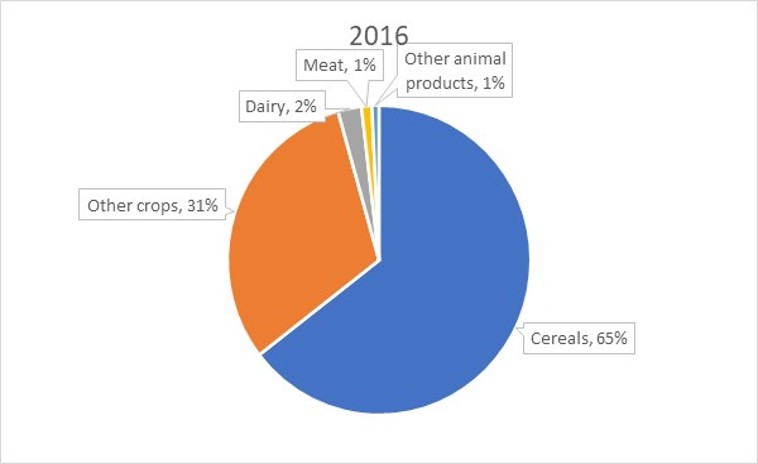
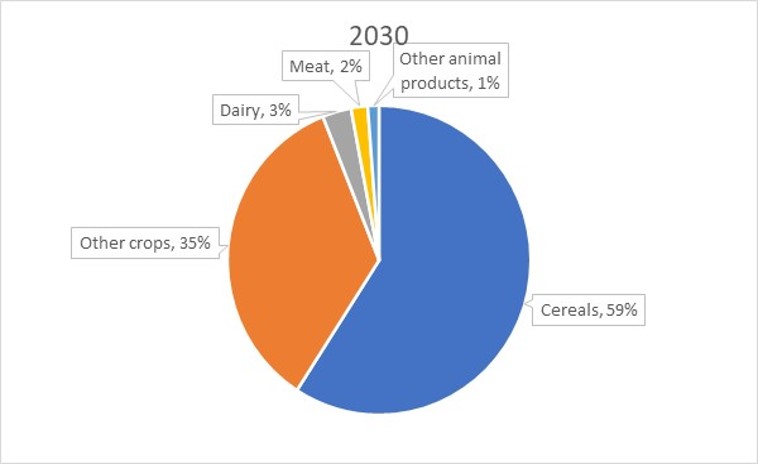
- Improved diets. Per capita consumption of agricultural products shifts towards the pattern of the richest 20%, with higher consumption of animal products and lower reliance on cereals.
- Industry sector:
- Fixed demand structure. Structure of energy demand stays constant. 1.6% annual reduction in energy intensity.
- Low energy intensity benchmark. Structure of energy demand in the industrial sector shifts to match that of a low energy intensive benchmark country (Philippines).
- Medium energy intensity benchmark. Structure of energy demand in the industrial sector shifts to match that of a medium energy intensive benchmark country (Bangladesh).
- High energy intensity benchmark. Structure of energy demand in the industrial sector shifts to match that of a medium energy intensive benchmark country (India).
- Climate Resilient Green Economy:
- Reforestation scenario. Forest cover doubles from current area by 2030
- Climate change impacts. Impacts of climate scenarios A2 (RCP8.5 equivalent) and B1 (RCP4.5 equivalent).